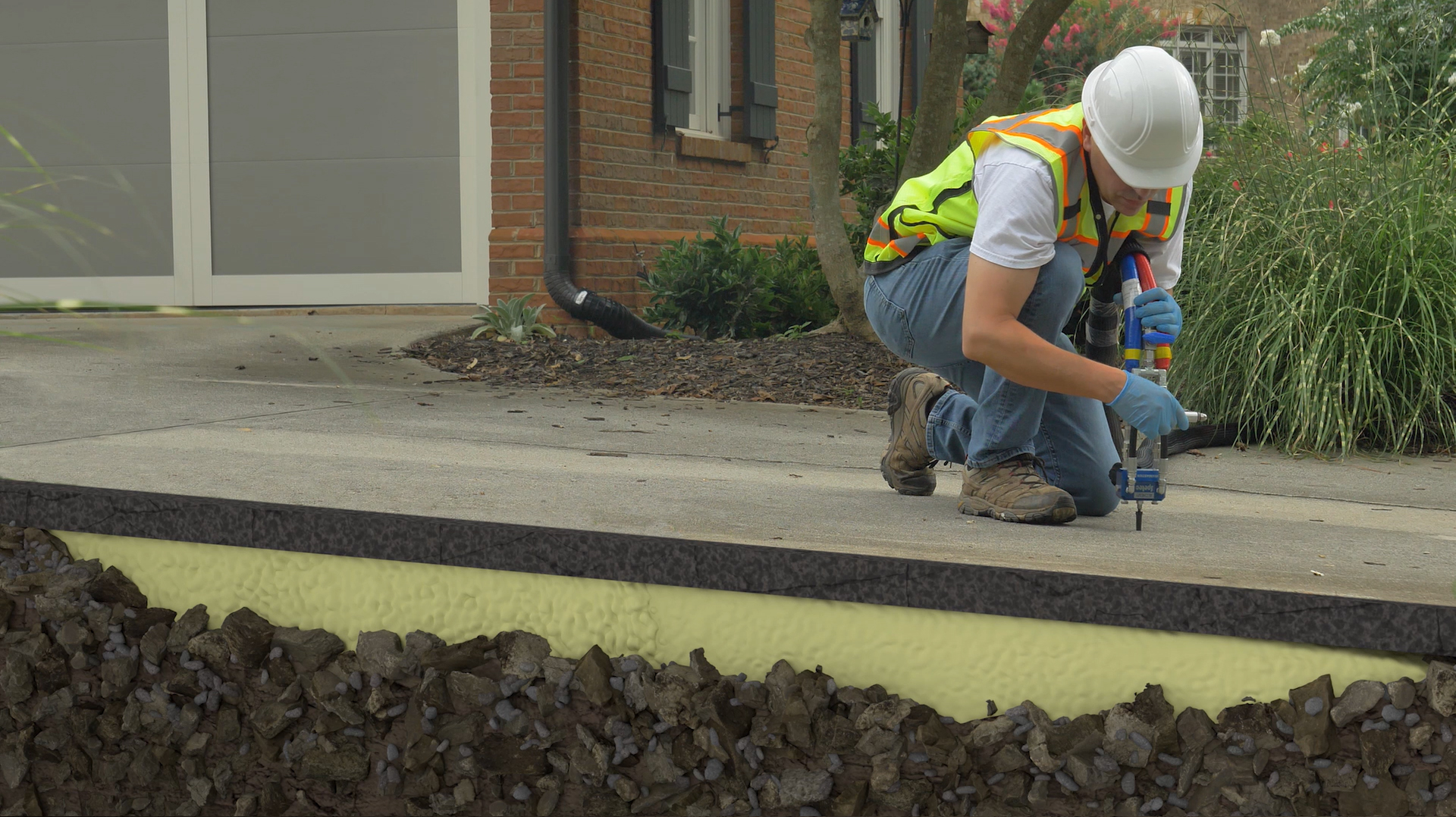
When your driveway, sidewalk, or patio starts sinking, you'll quickly discover there are two main repair methods: polyurethane foam injection (also called polyjacking or foam jacking) and mudjacking (also called slabjacking or concrete lifting).
But which one is better for Alabama homes? The answer might surprise you—especially when you understand how our state's unique soil and climate conditions affect long-term performance.
In this detailed comparison, we'll break down both methods, examine the pros and cons, and help you make the right decision for your property.
Table of Contents
- What Is Polyurethane Foam Injection?
- What Is Mudjacking?
- Side-by-Side Comparison
- Why Foam Works Better in Alabama
- Cost Analysis: Real Numbers
- Case Study: Birmingham Driveway
- Which Method Should You Choose?
What Is Polyurethane Foam Injection?
Polyurethane foam injection is a modern concrete lifting method that uses expanding foam to raise and stabilize sunken slabs.
The Process:
Step 1: Assessment
Technicians inspect the settlement and plan injection points.
Step 2: Drilling
Small holes (⅝-inch diameter) are drilled through the concrete at strategic locations.
Step 3: Foam Injection
A two-part polyurethane mixture is injected beneath the slab. The chemical reaction causes the foam to expand 20-30 times its liquid volume within seconds.
Step 4: Lifting
As the foam expands, it fills voids, compacts loose soil, and gently lifts the concrete back to its original position.
Step 5: Finishing
Holes are patched with color-matched mortar that blends with your concrete.
Total time: 2-4 hours for most residential projects
How the Foam Works:
The magic of polyurethane foam is in its chemistry:
- Expansion: Liquid foam expands to fill all voids and gaps
- Compaction: Expansion pressure compacts loose soil beneath the slab
- Curing: Foam hardens within 15 minutes into a strong, stable material
- Permanence: Cured foam is waterproof and won't wash out, rot, or deteriorate
Material properties:
- Density: 2-6 pounds per cubic foot (incredibly lightweight)
- Compression strength: Up to 120 PSI
- Water absorption: Less than 1%
- Lifespan: 10+ years (often decades)
What It's Best For:
- Driveways and garage floors
- Sidewalks and walkways
- Patios and pool decks
- Foundation support and void filling
- Commercial applications (warehouses, parking lots)
- Situations requiring fast cure time
- Projects in wet or unstable soil conditions
What Is Mudjacking?
Mudjacking (also called slabjacking) is a traditional concrete lifting method that's been used since the 1930s.
The Process:
Step 1: Assessment
Evaluation of settlement and planning of injection locations.
Step 2: Drilling
Larger holes (1½ to 2 inches diameter) are drilled through the concrete.
Step 3: Slurry Preparation
A mixture is made from:
- Portland cement
- Sand or limestone
- Soil or fly ash
- Water
Step 4: Pumping
The thick slurry is pumped under high pressure beneath the slab, filling voids and lifting the concrete.
Step 5: Curing
Material must cure for 24-48 hours before the surface can bear weight.
Total time: 4-8 hours of work + 1-2 days cure time
How Mudjacking Works:
Unlike expanding foam, mudjacking relies on hydraulic pressure:
- Filling: Slurry is pumped to fill voids
- Displacement: Continued pumping creates pressure that lifts the slab
- Settling: The mixture settles and hardens
- Support: Once cured, it provides support (but remains porous)
Material properties:
- Density: 100-115 pounds per cubic foot (very heavy)
- Compression strength: 50-100 PSI
- Water absorption: 10-20% (porous)
- Lifespan: 5-7 years (in Alabama conditions)
What It's Best For:
- Very large areas where cost is the primary concern
- Situations with stable, well-draining soil
- Projects with no time urgency
- Climates with minimal rainfall
- Budget-conscious repairs in ideal conditions
Side-by-Side Comparison
Here's how the two methods stack up across key factors:
| Factor | Polyurethane Foam | Mudjacking |
|---|---|---|
| Hole Size | ⅝ inch (barely visible) | 1.5-2 inches (very noticeable) |
| Weight Added | 2-6 lbs/cubic foot | 100-115 lbs/cubic foot |
| Cure Time | 15 minutes (drive immediately) | 24-48 hours |
| Project Duration | 2-4 hours | 4-8 hours + cure time |
| Typical Cost | $5-15/sq ft | $3-6/sq ft |
| Precision | Excellent (can lift in ⅛-inch increments) | Good (less precise control) |
| Water Resistance | Completely waterproof | Porous (can wash out) |
| Longevity | 10+ years | 5-7 years (less in wet climates) |
| Soil Compaction | Yes (foam pressure compacts) | Minimal |
| Environmental Impact | Low (recyclable, no waste) | Moderate (cement production) |
| Alabama Performance | Excellent (resists washout) | Fair (rainfall is a concern) |
| Appearance After Repair | Nearly invisible holes | Larger, visible patches |
| Weight on Soil | No additional load | Significant added weight |
Why Foam Works Better in Alabama
Alabama's unique conditions create significant challenges for concrete repairs. Here's why polyurethane foam outperforms mudjacking in our state:
Challenge #1: Heavy Rainfall (50-60 inches/year)
The Problem:
Alabama receives well above the national average rainfall. Water is the #1 enemy of mudjacking.
Why Foam Wins:
- Mudjacking: The porous cement mixture absorbs water, which can wash out over time, especially during our heavy spring storms and occasional tropical weather
- Foam: Completely waterproof with <1% water absorption. Won't wash out regardless of rainfall
Real-world impact: We've seen mudjacking repairs fail in as little as 2-3 years in wet Alabama conditions, while foam remains stable for 10+ years.
Challenge #2: Expansive Clay Soil
The Problem:
Most of Alabama sits on expansive clay soils that shrink and swell with moisture changes, creating constant movement beneath concrete slabs.
Why Foam Wins:
- Mudjacking: The heavy material (100+ lbs/cubic foot) adds significant weight to already unstable soil, potentially causing future settlement
- Foam: Ultra-lightweight (2-6 lbs/cubic foot) doesn't stress soil while providing superior support
Counties most affected: Jefferson, Shelby, Mobile, Montgomery, Tuscaloosa, Madison
Challenge #3: Erosion-Prone Soils
The Problem:
Water moving beneath concrete slabs washes away supporting soil, creating voids that cause settlement.
Why Foam Wins:
- Mudjacking: Water can erode around and through the porous material
- Foam: Creates a waterproof barrier that prevents future water infiltration and erosion
Challenge #4: Quick Cure Needs
The Problem:
Alabama homeowners can't afford to have driveways out of commission for days, especially during our busy spring and summer seasons.
Why Foam Wins:
- Mudjacking: 24-48 hour cure time means you can't drive on your driveway for 1-2 days
- Foam: Cures in 15 minutes—drive on it immediately after repair
Challenge #5: Aesthetic Concerns
The Problem:
Alabama homeowners take pride in their properties. Large, visible repair holes are unsightly.
Why Foam Wins:
- Mudjacking: 1.5-2 inch holes are highly visible even after patching
- Foam: ⅝-inch holes blend in and become nearly invisible over time
Cost Analysis: Real Numbers
Let's be honest about costs—the initial price difference often favors mudjacking. But is it really cheaper long-term?
Upfront Costs (Alabama Pricing, 2025):
Polyurethane Foam Injection:
- Residential driveways: $5-15 per square foot
- Average 2-car driveway (500 sq ft): $1,800-$3,500
- Typical project: $2,000-$2,500
Mudjacking:
- Residential driveways: $3-6 per square foot
- Average 2-car driveway (500 sq ft): $1,200-$1,800
- Typical project: $1,400-$1,600
Initial savings with mudjacking: $400-$900
Long-Term Cost Analysis:
Scenario: 500 sq ft driveway in Birmingham area
Option 1: Polyurethane Foam
- Initial repair: $2,200
- Lifespan: 10+ years
- Re-repair needed: Likely never
- 10-year cost: $2,200
Option 2: Mudjacking
- Initial repair: $1,500
- Lifespan: 5-7 years (in Alabama climate)
- Re-repair at year 6: $1,500
- 10-year cost: $3,000
Long-term savings with foam: $800
Hidden Costs of Mudjacking:
Beyond the price tag, consider:
- Downtime: Can't use driveway for 24-48 hours (what's that worth to you?)
- Inconvenience: Heavy equipment, larger mess
- Re-repair frequency: More likely to need future fixes
- Property value: Visible, large patches affect curb appeal
Case Study: Birmingham Driveway Repair
Let's look at a real Alabama Polylift project that illustrates the difference.
The Problem:
Location: Mountain Brook, AL (Jefferson County)
Property type: 1990s home with 600 sq ft driveway
Issue: 3-inch gap between driveway and garage, water pooling near foundation
Previous repair attempt: Mudjacking done 4 years prior had failed. Settlement returned due to water erosion washing out the porous cement mixture.
The Polyurethane Foam Solution:
Timeline:
- Free inspection scheduled within 3 days
- Repair completed in one morning (3.5 hours)
- Homeowner drove on it that afternoon
Process:
- Drilled 8 small (⅝-inch) injection points
- Injected high-density polyurethane foam
- Lifted driveway back to original level
- Eliminated 3-inch gap completely
- Created positive drainage away from foundation
Cost: $2,350
Results After 2 Years:
- Zero settlement
- Gap remains closed
- No water issues
- Homeowner reports: "Best money we spent on the house"
Comparison to previous mudjacking:
- Mudjacking lasted: 4 years before failure
- Foam (so far): 2 years with zero issues
- Homeowner confidence: Much higher with foam
Why Foam Succeeded Where Mudjacking Failed:
- Waterproof: Heavy Alabama rains couldn't wash it out
- Lightweight: Didn't add stress to already problematic clay soil
- Complete void filling: Foam expanded into every gap, leaving nowhere for water to penetrate
- Soil compaction: Expansion pressure compacted loose soil beneath slab
Which Method Should You Choose?
Here's our honest recommendation based on 1,000+ Alabama concrete lifting projects:
Choose Polyurethane Foam If:
✅ You live anywhere in Alabama (our climate favors foam)
✅ You want a permanent, long-term solution
✅ Your soil has drainage or stability issues
✅ You need to use the surface immediately
✅ You value aesthetics (small, nearly invisible holes)
✅ You've had mudjacking fail before
✅ The area experiences regular water exposure
✅ You want the best value over 10+ years
Bottom line: Foam is the best choice for 90% of Alabama concrete lifting projects.
Consider Mudjacking If:
✅ You have a very tight budget and understand the trade-offs
✅ The area has perfect soil conditions (rare in Alabama)
✅ You can afford to have the surface out of commission for 2 days
✅ You don't mind larger, more visible holes
✅ You're okay with potentially needing re-repair in 5-7 years
✅ The area is protected from water (even then, we'd still recommend foam)
Bottom line: Mudjacking might save money upfront but rarely provides better long-term value in Alabama.
When to Choose Neither:
❌ Concrete is severely cracked or structurally damaged (replacement needed)
❌ Settlement is due to ongoing foundation failure (address foundation first)
❌ The area will be heavily loaded beyond concrete capacity
❌ You want to change the design or appearance (replacement better option)
What Alabama Experts Recommend
We asked Alabama structural engineers and soil scientists about concrete lifting methods. Here's what they told us:
Dr. James Mitchell, Geotechnical Engineer, UAB:
"In Alabama's expansive clay soils with high rainfall, polyurethane foam injection provides superior performance. The lightweight material doesn't add stress to unstable soils, and the waterproof properties prevent the erosion issues we commonly see with cement-based slurries."
Alabama Polylift, 15+ Years Experience:
"We started offering both methods but stopped mudjacking 10 years ago. In Alabama's climate, we saw too many mudjacking repairs fail within 5 years. Polyurethane foam simply performs better long-term, and our customers appreciate not having to repeat the repair."
HomeAdvisor Alabama Reviews:
Average satisfaction ratings:
- Polyurethane foam injection: 4.8/5 stars
- Mudjacking: 3.9/5 stars
Common complaints about mudjacking: "Didn't last," "Settlement returned," "Water washed it out"
Common Questions About Both Methods
"Why is foam more expensive if it uses less material?"
Great question! The cost difference comes from:
- Specialized equipment ($100,000+ investment)
- Highly trained technicians
- Premium materials with superior performance
- Better long-term results = better value
Think of it like comparing generic vs. premium paint—the better product costs more but delivers better results.
"Will insurance cover the repair?"
Typically, no. Most homeowners insurance excludes "maintenance" issues like concrete settlement. However:
- If settlement is due to a covered event (plumbing leak, storm damage), you may have coverage
- Some policies cover foundation-related concrete issues
- Always check with your insurance agent
"Can I do foam injection myself?"
Not recommended. Here's why:
- Equipment costs $50,000-$150,000
- Requires specialized training
- Improper injection can crack or over-lift concrete
- Material handling requires safety certifications
- No warranty if you DIY
Save yourself the headache and liability—hire professionals.
"How do I know if the contractor is experienced?"
Ask these questions:
- How many foam injection projects have you completed in Alabama?
- Can you provide local references from the past year?
- What warranty do you offer?
- Are you licensed and insured?
- Do you have before/after photos of similar projects?
Red flags: Vague answers, pushy sales tactics, "today-only" pricing
The Bottom Line: Best Choice for Alabama Homes
After comparing both methods across all factors that matter—cost, durability, performance in Alabama conditions, and long-term value—polyurethane foam injection is the clear winner for Alabama homeowners.
Yes, you'll pay 30-50% more upfront. But you'll get:
- ✅ 2x the lifespan (or more)
- ✅ Better performance in our wet, clay-soil conditions
- ✅ Immediate use (no waiting days)
- ✅ Cleaner, more professional results
- ✅ Lower long-term costs
The verdict: Polyurethane foam injection is worth the investment for Alabama homes.
Ready to Level Your Concrete the Right Way?
Alabama Polylift specializes in polyurethane foam injection for residential and commercial properties across Alabama. We chose foam over mudjacking because we saw firsthand that it simply works better in our state's challenging conditions.
What you get with Alabama Polylift:
- ✅ Free, no-obligation inspection and quote
- ✅ Same-day or next-day service available
- ✅ Experienced technicians (1,000+ Alabama projects)
- ✅ Industry-leading warranty
- ✅ Competitive pricing
- ✅ Local company that stands behind our work
Get Your Free Quote: Schedule online or call us today.
Serving: Birmingham, Huntsville, Montgomery, Mobile, Tuscaloosa, Hoover, Dothan, Auburn, Decatur, Madison, and all surrounding areas.
Related Articles:
- How Much Does Concrete Leveling Cost in Alabama?
- Driveway Sinking? Warning Signs and Solutions
- Why Concrete Lifting Is Faster Than Replacement
Last Updated: November 2025